

Role: UX/UI Designer
Timeline: 6 Days
Event: Hackathon by GenHax
Platform: Mobile Application
The Challenge and Solution
How can we prevent duplicate records, incomplete applications, and fragmented communication between NaamHouse, agencies, and veterans in need?
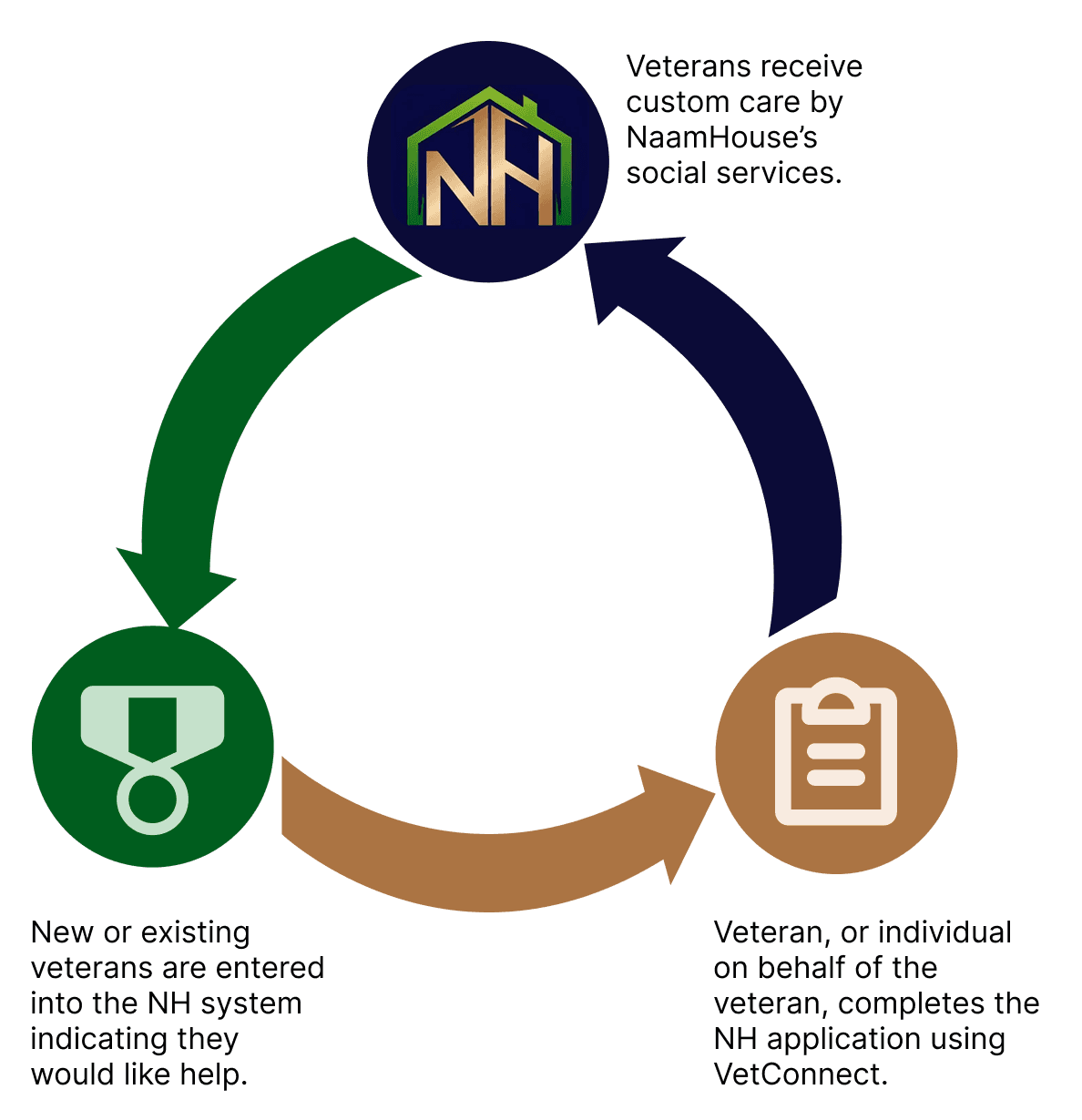
Discovery & Research
Before designing the interface, my hackathon team and I explored how a veteran might enter the housing assistance system and identified the various stakeholders involved throughout the process. Veterans experiencing homelessness often encounter multiple organizations including law enforcement, hospitals, social workers, shelters, and government agencies before receiving long-term assistance.
We organized our ideas around three key "how might we" questions:
How might we simplify the application process for stakeholders and veterans?
How might we reduce duplicate applicant records across agencies?
How might we create an experience that is accessible for users?
These questions helped us identify opportunities to improve communication between agencies while reducing friction for both applicants and staff.
The three primary users identified for VetConnect represent the key groups involved in supporting homeless and at-risk veterans. Veterans use the app to quickly locate trusted resources such as shelters, healthcare, meals, and mental health services in a simple and accessible way.
Healthcare professionals, such as ER nurses, need an efficient tool to connect veterans with approved organizations and appropriate care while working within hospital protocols.
First responders and law enforcement officers benefit from having immediate access to verified veteran-specific resources, allowing them to make informed referrals and better assist individuals they encounter in the community. Together, these users share a common goal of improving access to support services and creating a more coordinated system of care for veterans in need.

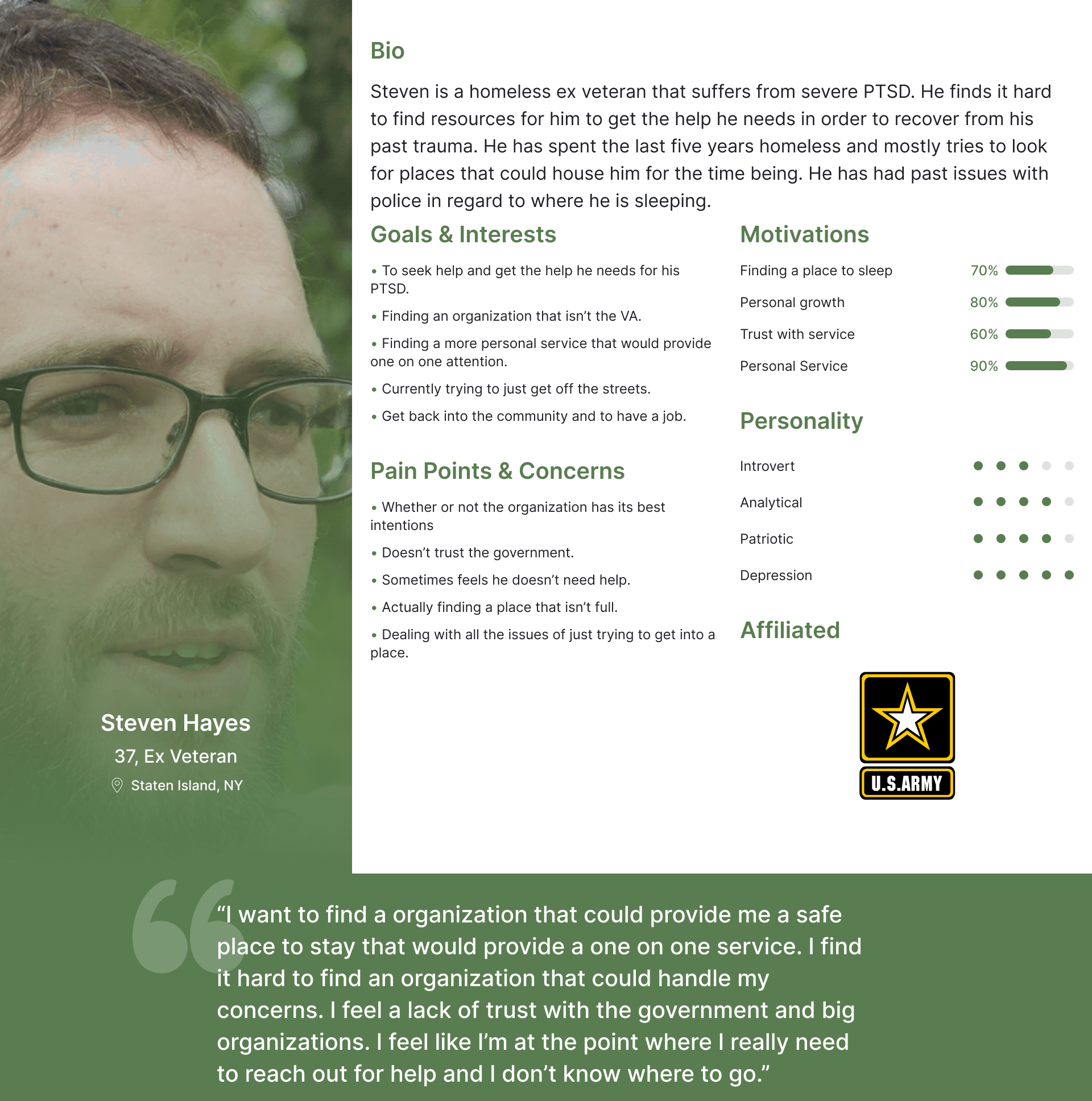
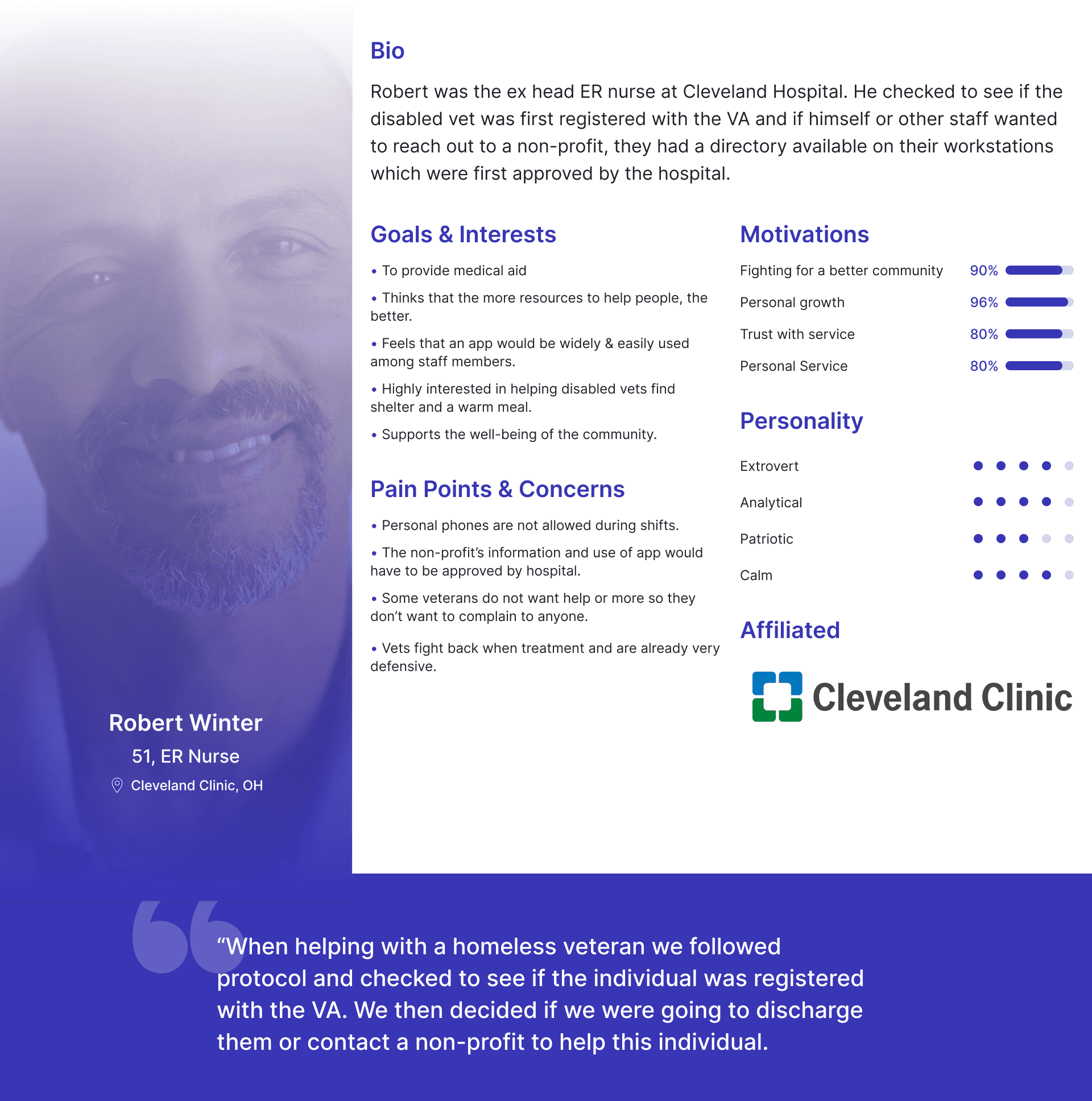
To better understand the referral process, we interviewed professionals who are likely to encounter veterans experiencing homelessness or disability before they reach a housing organization.
These conversations revealed that law enforcement and healthcare providers are often the first point of contact. Their feedback helped us identify key insights, understand real-world situations, and their veteran handling experiences.
We decided from their feedback that we would design a mobile application that supports faster referrals and better coordination between agencies.
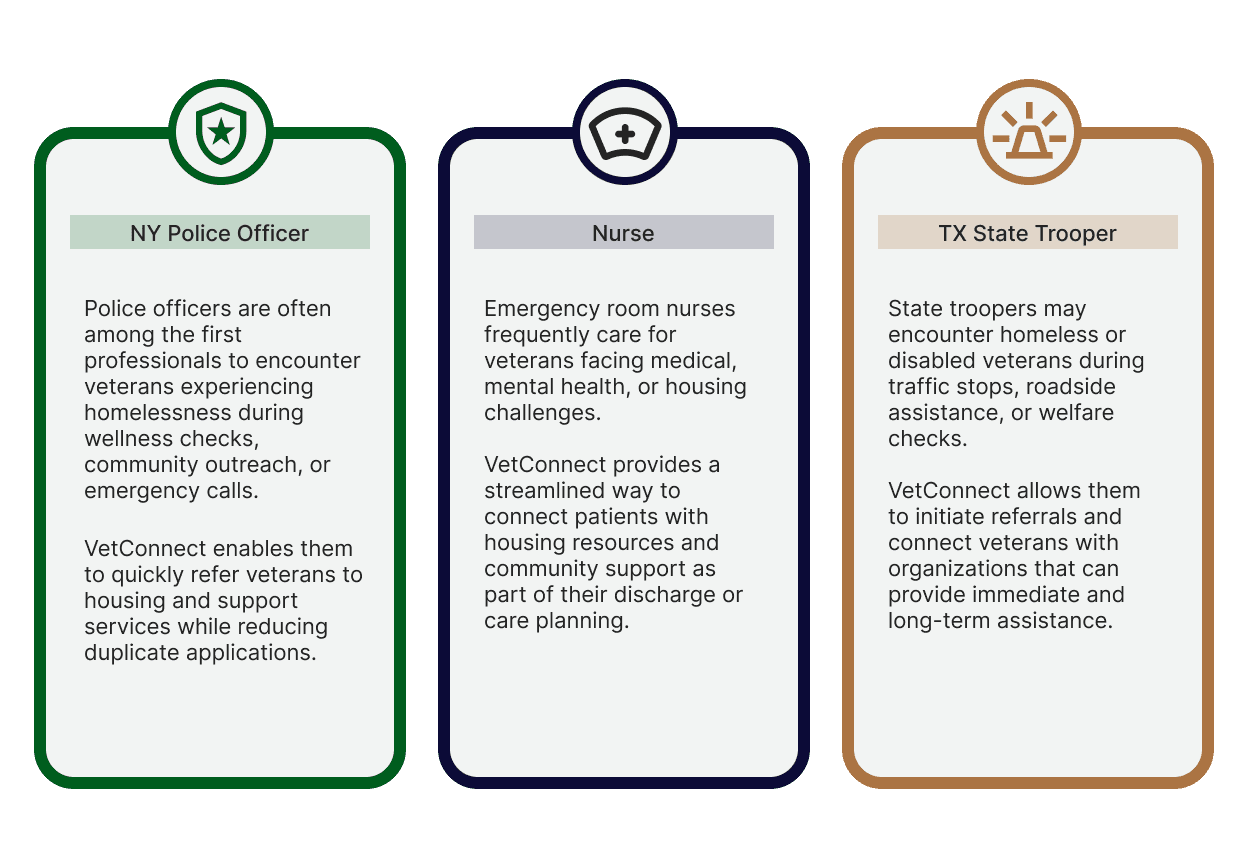

Online research focused on understanding the broader challenges contributing to veteran homelessness and the network of organizations involved in providing support.
We reviewed academic research, nonprofit resources, and government publications to better understand common barriers such as poverty, disabilities, limited support systems, and access to affordable housing.
The research revealed that successful outcomes require coordination among multiple stakeholders rather than a single organization. This finding reinforced the need for a centralized, accessible application that enables agencies to identify existing records, reduce duplicate applications, and connect veterans to housing resources more efficiently.
The combined findings from our primary and secondary research directly influenced the application's flow and using our stakeholder model.
Designing & Iterating
The information architecture for VetConnect was designed to provide a simple, intuitive experience tailored to each user type while maintaining a consistent navigation structure. Upon logging in, users select their role on the settings page, allowing the application to present the most relevant workflow and features for their needs.
Veteran User Flow:
Veterans log in using a standard authentication process and select Veteran on the settings page. They are then guided through an application where they provide personal information and details about their needs. After completing the required fields, they review and submit the application for processing.
Healthcare & Law Enforcement User Flow:
Healthcare professionals and law enforcement officers can log in using a standard account or authenticate through ID.me. After selecting their profession on the settings page, they begin an application on behalf of a veteran by entering the necessary information and submitting it to connect the individual with appropriate resources and services.
Shared Features for All Users:
Regardless of role, all users can learn more about NAAM House, access contact information to reach the organization directly, and customize the app using accessibility settings designed to improve usability and support users with diverse needs.

The visual identity draws inspiration from military colors and the branding of NAAM House to create a sense of trust, familiarity, and professionalism. Authentic military-inspired imagery reinforces the app's mission while maintaining a welcoming feel. High-contrast color combinations, legible typography, and accessible design choices were intentionally incorporated to support users of all abilities and align with WCAG accessibility principles.
The accessibility menu was designed to give users greater control over their experience within the VetConnect app. It includes a variety of settings to improve usability and accommodate different needs. The examples shown demonstrate features such as a monochrome display mode for enhanced visual accessibility and an interface with the on-screen keyboard open, illustrating how the app remains functional and easy to navigate while users enter information.

Before designing the interface, my hackathon team and I explored how a veteran might enter the housing assistance system and identified the various stakeholders involved throughout the process. Veterans experiencing homelessness often encounter multiple organizations including law enforcement, hospitals, social workers, shelters, and government agencies before receiving long-term assistance.
We organized our ideas around three key "how might we" questions:
How might we simplify the application process for stakeholders and veterans?
How might we reduce duplicate applicant records across agencies?
How might we create an experience that is accessible for users?
These questions helped us identify opportunities to improve communication between agencies while reducing friction for both applicants and staff.
Throughout this project, I strengthened and expanded my skills in several key areas, including:
Empathy and user-centered design
Effective communication with teammates, stakeholders, and developers
Agile UX methodologies
Hands-on information architecture
Designing accessible experiences for blind and deaf users while following WCAG guidelines
This project also taught me that I am capable of accomplishing more than I previously believed. I am incredibly proud of what my team and I achieved in such a short timeframe, as well as the meaningful purpose behind the mobile product and the positive impact it was designed to make.We reviewed academic research, nonprofit resources, and government publications to better understand common barriers such as poverty, disabilities, limited support systems, and access to affordable housing.

Zensory